From the 1979 Revolution to Today's Deadlock: An Analytical Look at the Erosion of Power in the Islamic Republic of Iran
Five decades after the 1979 revolution, the erosion of legitimacy, efficiency, and the capacity to reproduce social consensus has left the Islamic Republic facing a kind of structural paralysis. In this article, Shahriar Sanaei shows how a rapidly transforming society has come face to face with a government stuck in the language and logic of the revolution's early decades. In this […]
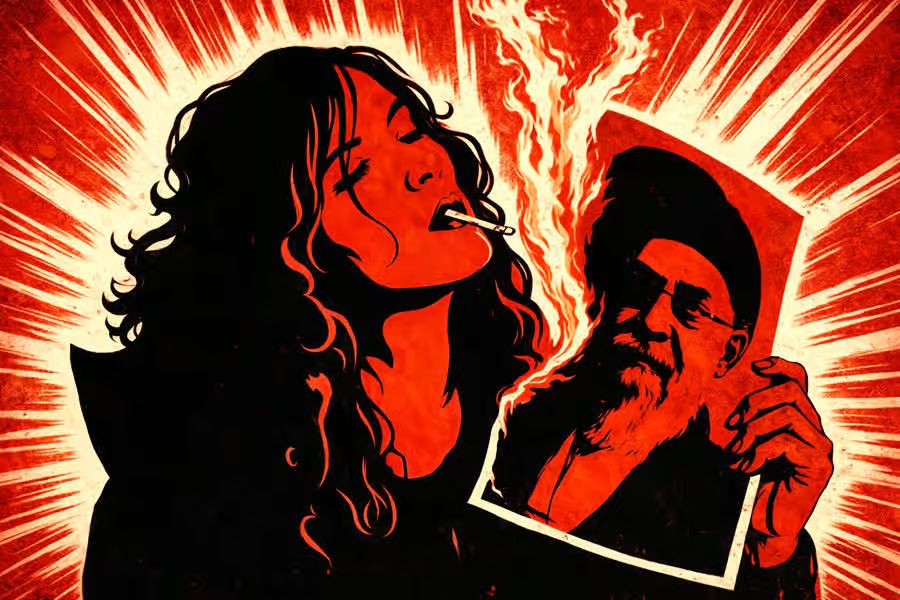
Five decades after the 1979 revolution, the erosion of legitimacy, efficiency, and the capacity to reproduce social consensus has left the Islamic Republic facing a kind of structural paralysis. In this article, Shahriar Sanaei shows how a rapidly transforming society has come face to face with a government stuck in the language and logic of the revolution's early decades. In this framework, while the "Woman, Life, Freedom" movement emerged as the peak of the divide between a transformed society and a stagnant government—revealing the possibility of a socio-political transition—domestic repression and the return of individual-centric leadership models within the opposition have today turned the post-Islamic Republic future into an open and unresolved question.