Democratic Transition Guidebook and the Necessity of Drafting a "Transition Booklet"
The Position Framework of the Progressive Iranians Party Regarding Transition. The Progressive Iranians Party believes that political transition in Iran must be a national, collective, and cross-party process formed on the basis of the convergence of pro-democracy forces. Iran's historical experience and that of many countries have shown that the primary danger during the period of power transfer is not merely the continuation of past tyranny […]
August 1, 2026
Status:
Under Peer Review
Following each round of peer review, this document is revised and updated. At the conclusion of the peer review process, the status of this document will be finalized, and its label will change to Finalized Version. Authors: The Party's Temporary Preparatory Council.
Written:
The Position Framework of the Progressive Iranians Party Regarding Transition
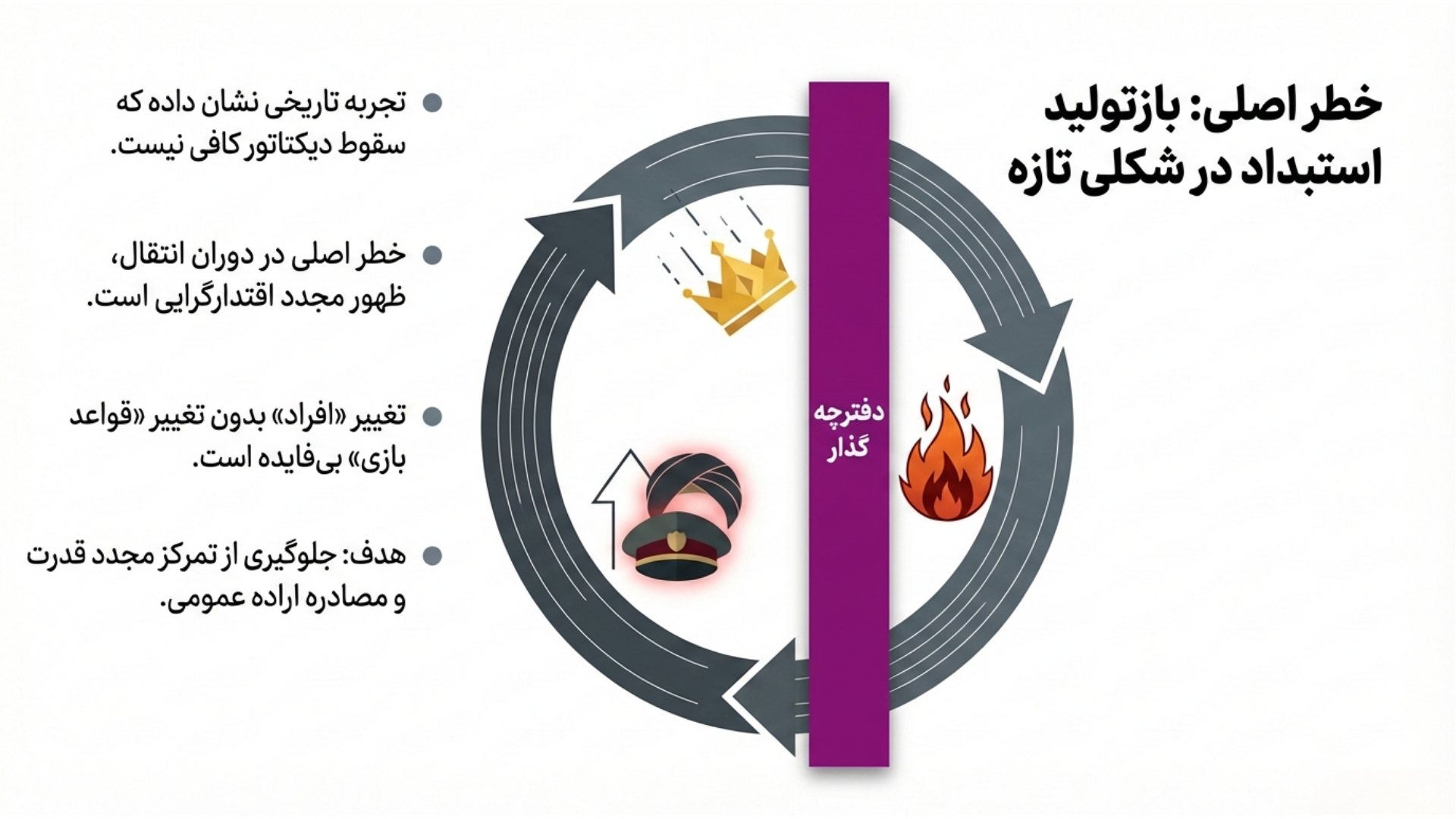
The Progressive Iranians Party believes that political transition in Iran must be a national, collective, and cross-party process formed on the basis of the convergence of pro-democracy forces. The historical experience of Iran and many countries has shown that the primary danger during the period of power transfer is not merely the continuation of past tyranny, but also the possibility of the reproduction of authoritarianism in a new form. Under such circumstances, emphasizing the framework and rules of transition is much more important than the composition of individuals or parties in the transition institution. The purpose of this document is to prevent the re-concentration of power and the confiscation of the public will by providing clear principles and rules.
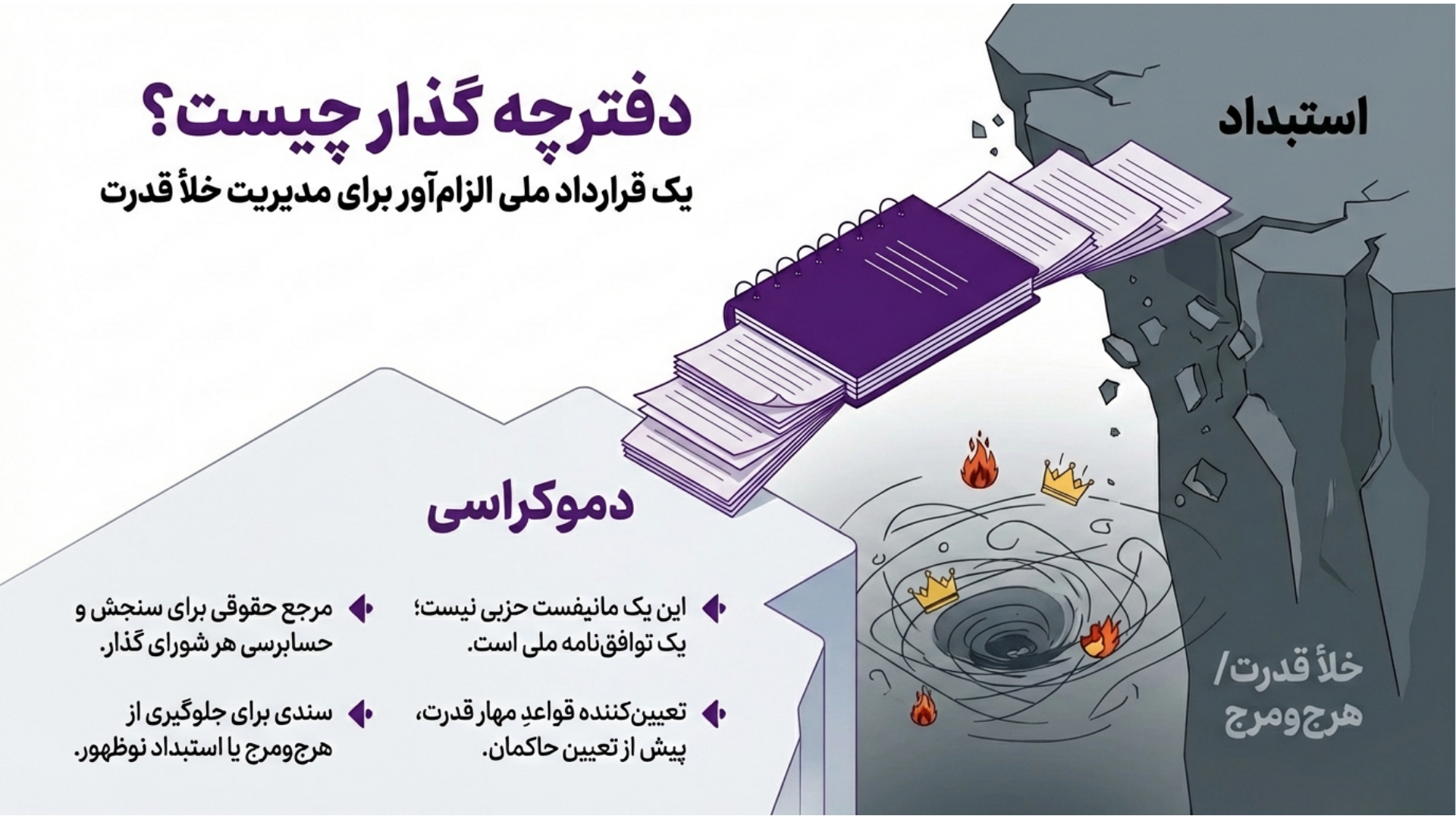
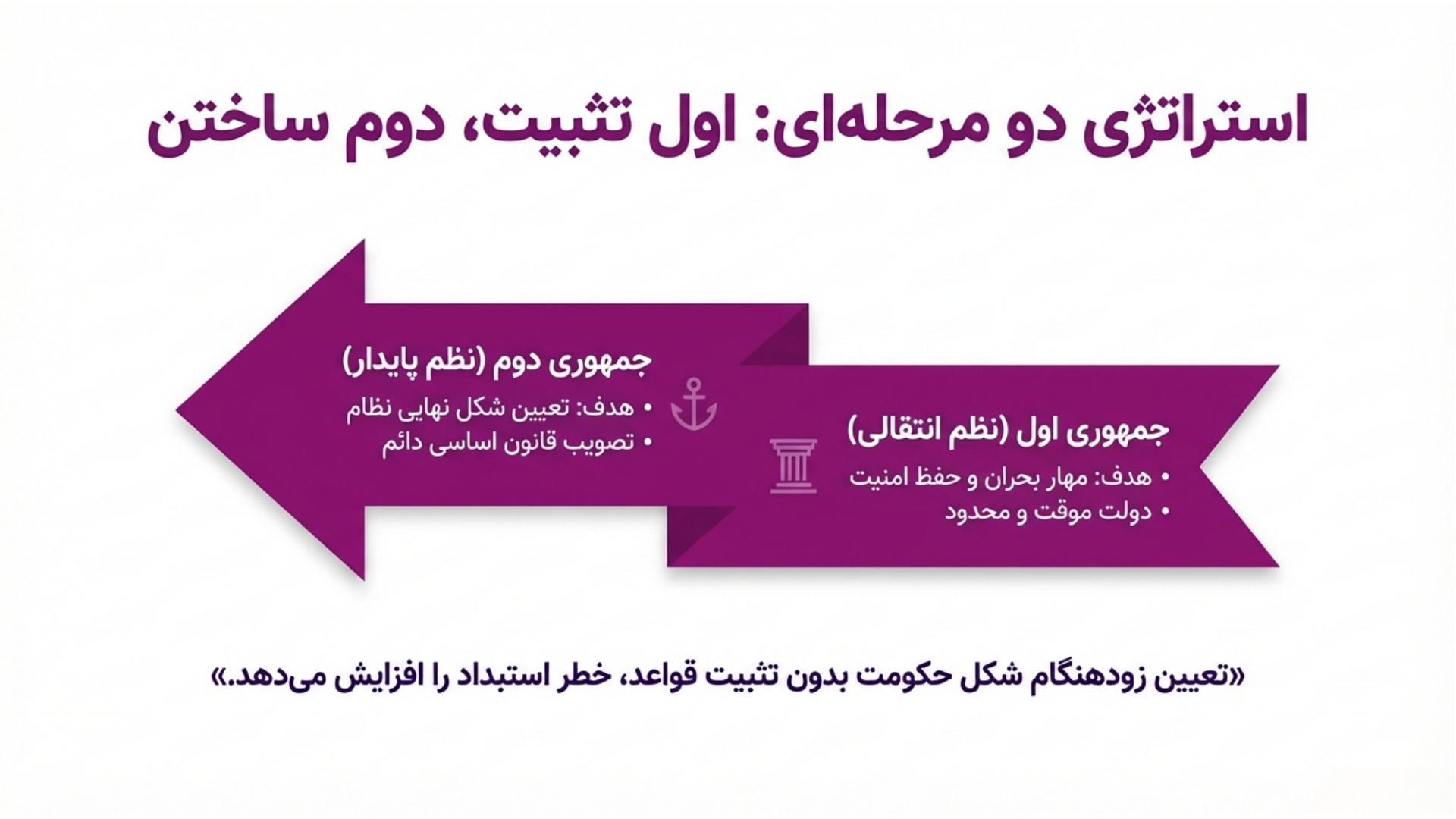
Democratic transition requires a credible political-legal authority so that any transitional institution can be evaluated, held accountable, and subjected to public scrutiny on its basis. Before determining the final form of the future regime, it is essential to specify the rules for exercising, checking, and transferring power: how power is acquired, how it is controlled, and how it is lost. Only after these rules are established can society decide on the final form of the political system. The experience of other countries shows that prematurely determining the symbolic form of government without stabilizing the rules for checking power increases the risk of hasty referendums and the imposition of a political order by dominant forces.
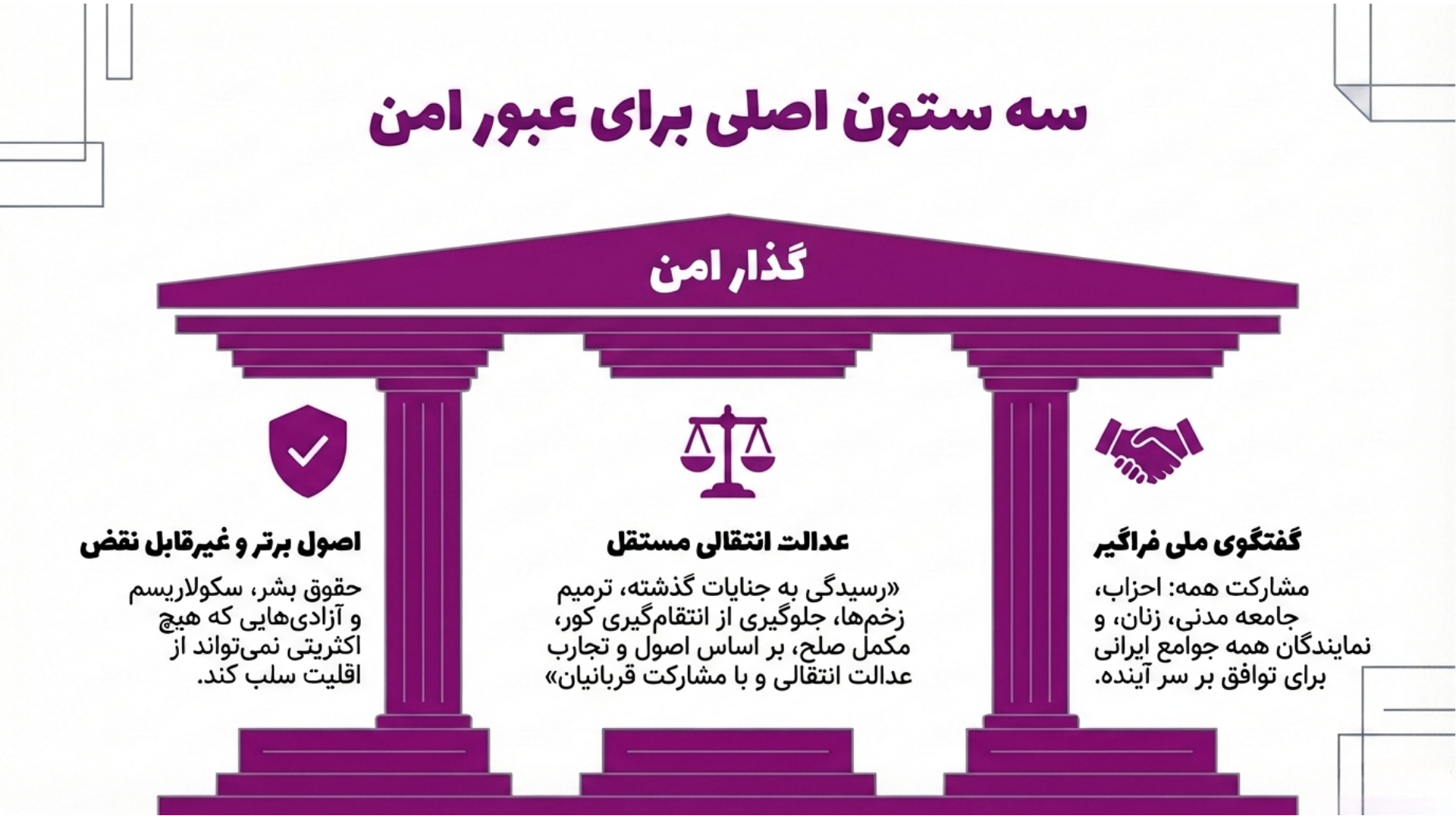
Transition experiences in Africa and the Middle East also highlight the importance of "national dialogue". In countries where formal institutions have malfunctioned or lost their legitimacy, national dialogues have been employed as an inclusive mechanism to reach agreement on constitutional frameworks and shape a new social contract. These dialogues must include representatives of the government, the opposition, civil society, armed groups, women, youths, and minorities, and possess clear rules and structures. Research emphasizes that national dialogue is not a solution to all problems and must be part of a chain of local, regional, and national dialogues. However, in the absence of such an inclusive space, overcoming crisis and bridging deep social and political divides will be difficult. In today's Iran, where the ruling government refuses to participate in dialogue and repression continues, the primary priority is to create a safe and credible space for organizing democratic forces and human rights defenders so they can define the path forward; the participation of government forces in national dialogues can be facilitated in later stages and after the end of repression.
Simultaneously with focusing on national dialogue, it is essential to address the issue of accountability and transitional justice. The experience of other countries shows that transitional justice should not be viewed merely as a result of national dialogues, but rather as an independent and complementary pillar of the peace process; transitional justice is designed to address past violations, whereas national dialogues seek to reach agreement on governance issues and state structure. Therefore, examining options for international accountability, including the establishment of a tribunal or treaty-based mechanism to address widespread crimes and systematic human rights violations, is essential. This path must be accompanied by strengthening the capacity of Iranian jurists and judicial activists to pave the way for the formation of an independent, impartial, and efficient judiciary within the country. With such an approach, transitional justice and national dialogue can complement each other and advance political and legal solutions simultaneously.
Reference to an Important Historical Experience
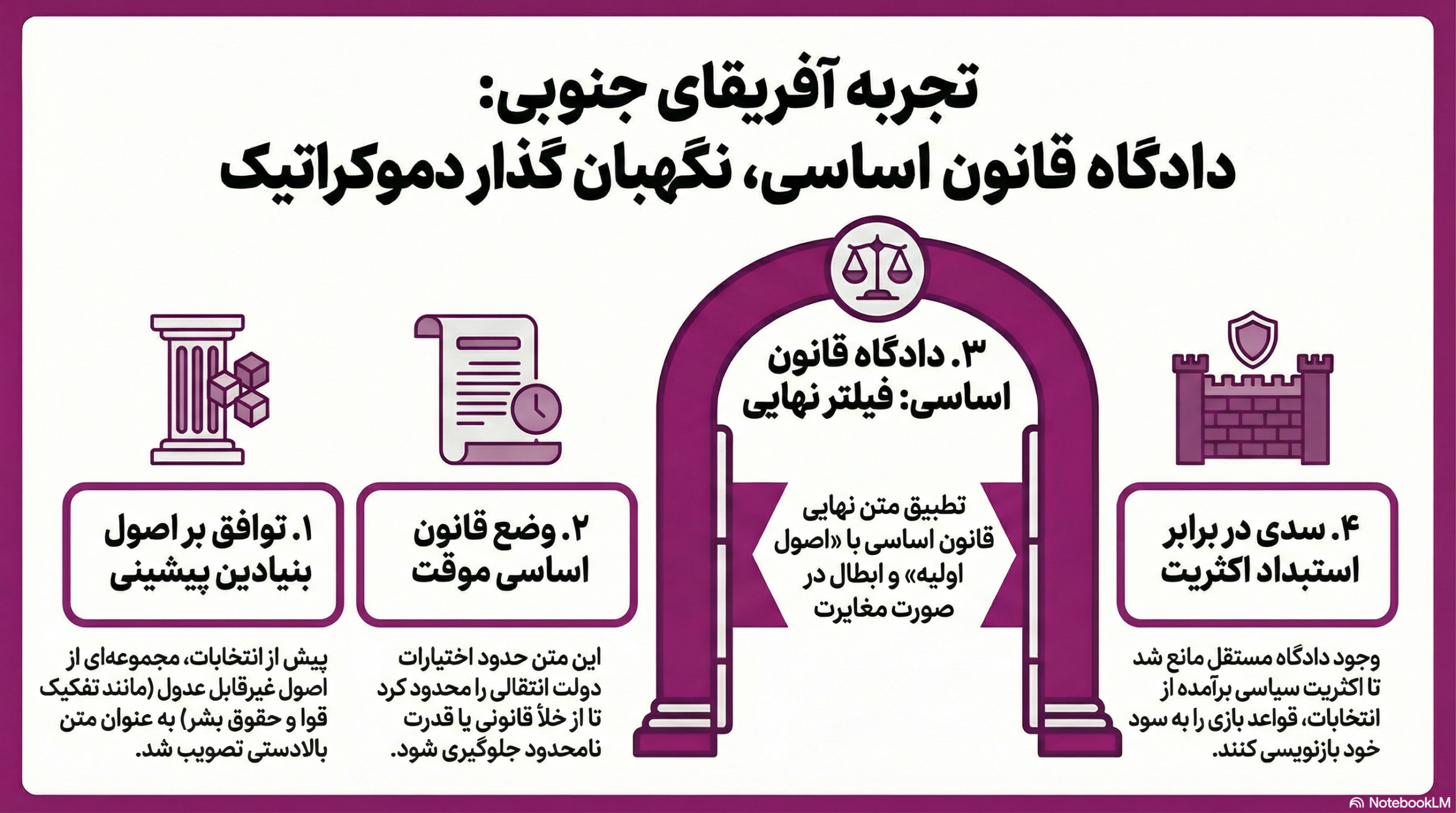
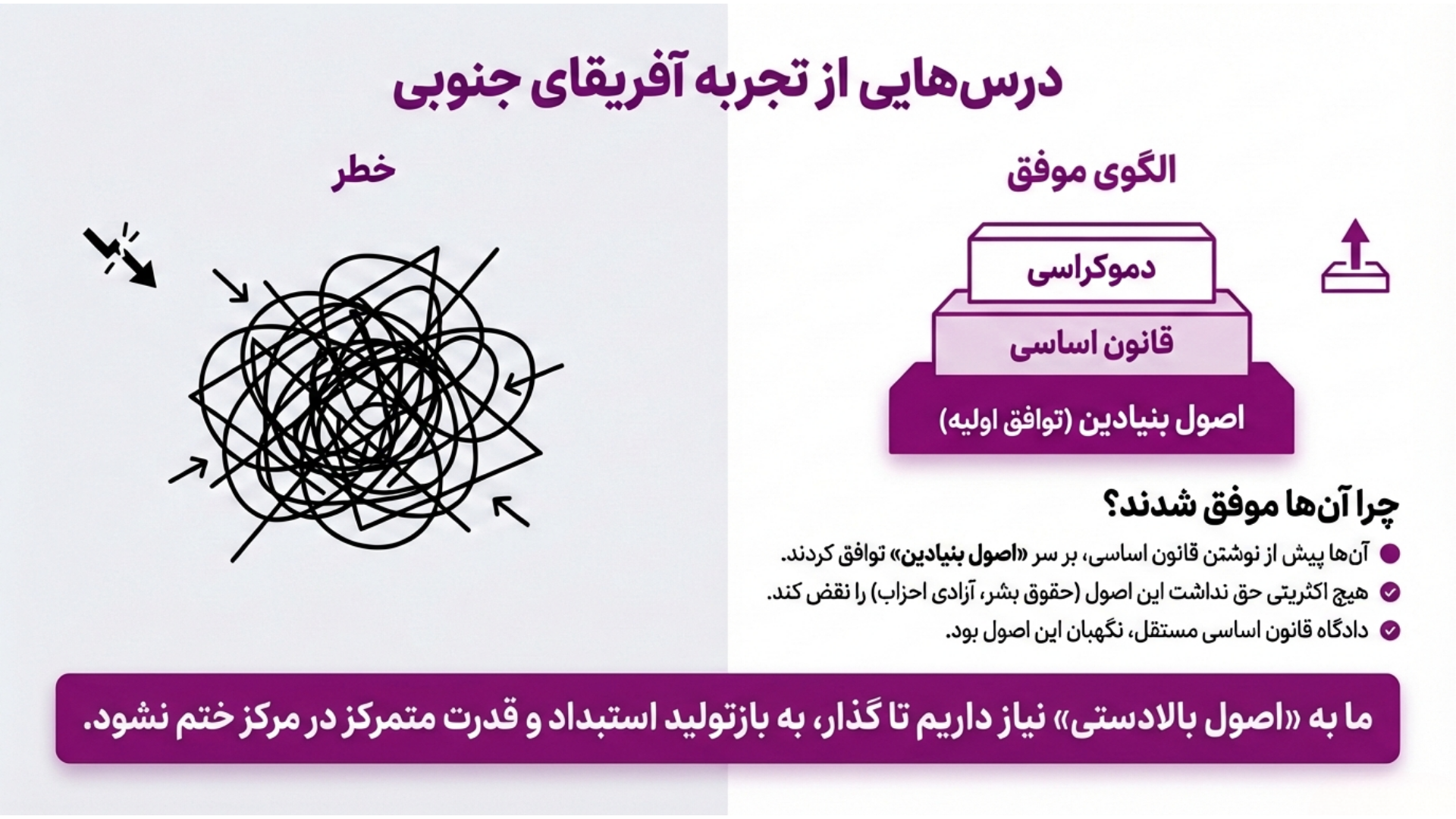
To understand the importance of binding frameworks during the transition period, South Africa's transition experience is a clear example. The transition from an authoritarian order to a democratic one in this country began not by relying on the will of a transitional council, nor through hasty elections, or by pre-determining the final form of the political system, but by establishing a set of foundational principles. Prior to the first free elections, "constitutional principles" were agreed upon as an unalterable supreme text. These principles emphasized popular sovereignty, separation of powers, judicial independence, a bill of fundamental rights, a multi-party system, and limitations on power. These principles were incorporated into the interim constitution as a binding appendix and became the legal benchmark for the entire transition process. Based on these very principles, the interim constitution was ratified—a time-bound text that both defined the structure of the transitional government, limited the scope of its powers, immediately rendered fundamental rights enforceable, and specified the mechanism for drafting the permanent constitution. Thus, the transition did not begin in a legal vacuum, and the transitional government did not become an unlimited constituent power. The existence of an independent constitutional court with the jurisdiction to align the final constitutional text with prior principles prevented the political majority emerging from elections from violating the initial agreement or rewriting the rules of the game to its own advantage. This experience demonstrates that without the triad of supreme principles, an interim constitution, and an independent constitutional court, transition is exposed to two fundamental dangers: either it leads to chaos and legal vacuum, or to the re-concentration of power in the hands of the transitional institution.
The Transition Project: Transferring Power to the Public Ownership of Citizens and Establishing the Right to Self-Determination for All the Peoples of Iran
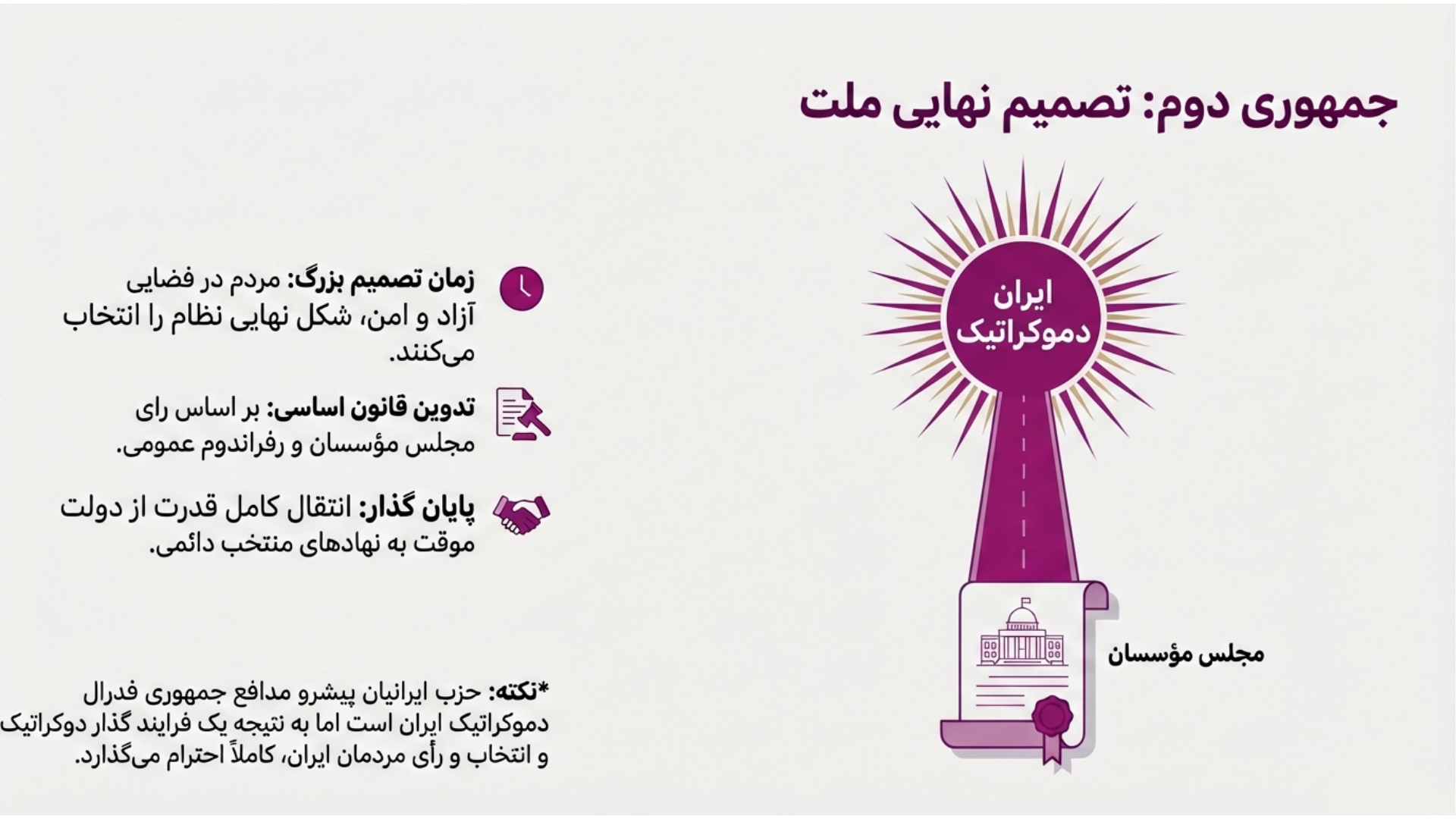
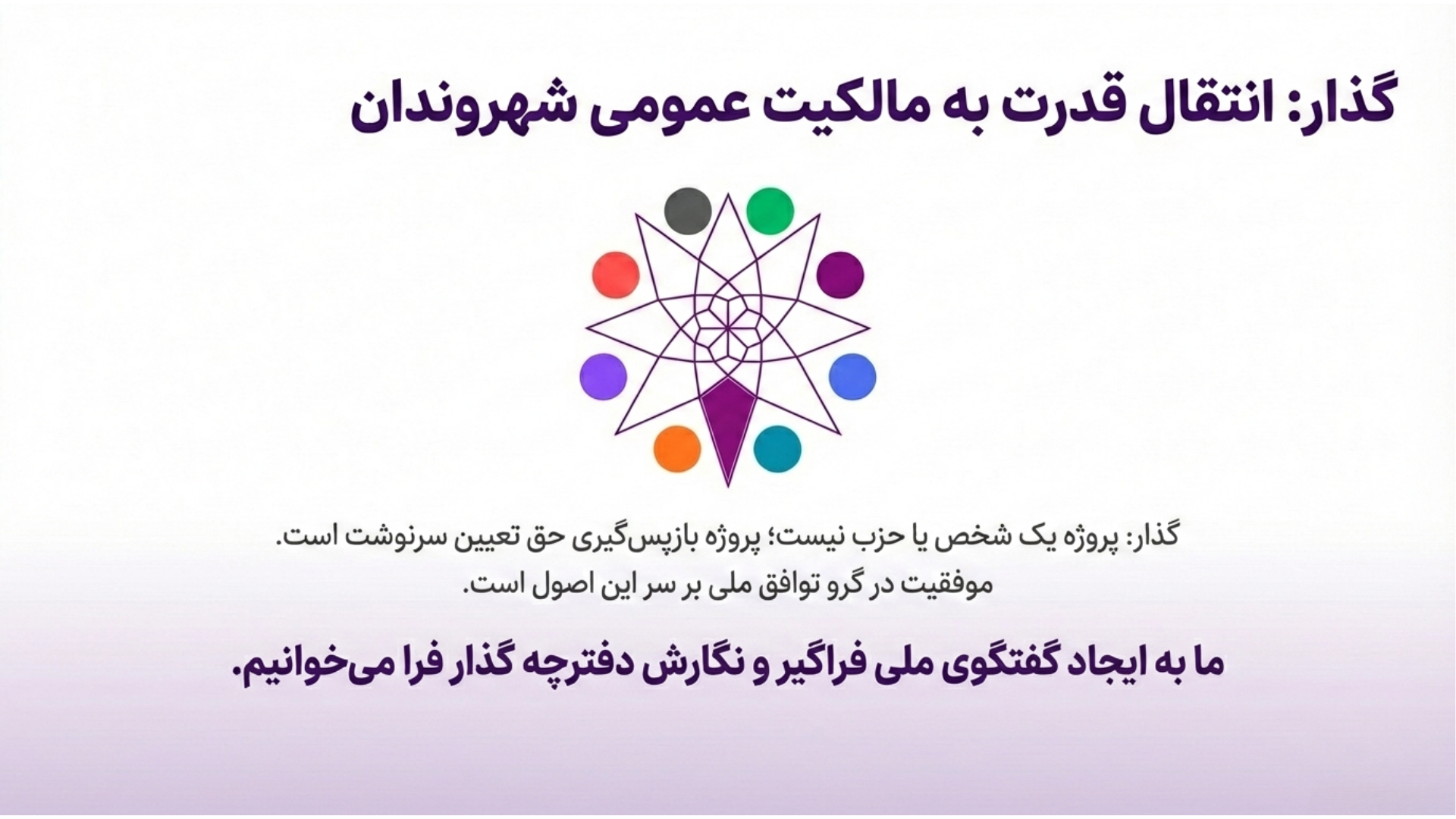
Transition in Iran is neither the project of republicans nor monarchists; neither the project of a single council, group, faction, or organization; rather, it is the project of transferring power from the political ownership of groups and individuals to the public ownership of citizens and establishing the principles of democracy and the right to self-determination for the people of Iran. This project must advance based on a national consensus regarding foundational principles and rules for checking power, after which society can decide on the final form of the system at an appropriate time. Within this framework, if in a democratic process and following the consolidation of republican institutions and power-check rules, society chooses in a free referendum the form of a constitutional monarchy in which the monarch has no involvement in executive and political power and all power is concentrated in elected and accountable institutions, this choice will not be incompatible with democratic principles; although the Progressive Iranians Party will strive and campaign for the establishment of a democratic federal republic of Iran under such conditions.
Given the danger of premature referendums, the imposition of the regime's form prior to the consolidation of power rules, and the appropriation of Iranian nationalism for the benefit of authoritarian factions, it is imperative to draft a standard and reliable document for transition. This document, which may be called the "Transition Booklet" or the "Democratic Transition Baseline Booklet", must be swiftly drafted and published with the participation of jurists, governance experts, political forces, minority representatives, and civil institutions—including the active participation of the Progressive Iranians Party—to meticulously explain the transition process, its threats, necessities, and democratic conditions, and to become a public benchmark for assessing the performance of any future transition council. Inclusive national dialogue can provide a platform for drafting such a document—a mechanism that engages all stakeholder groups and incorporates legal guarantees and accountability mechanisms from the outset. The existence of such an independent document enables civil society and political forces to judge any power-transfer mechanism based on clear principles, hold it accountable, and organize their political and legal participation based on transparent criteria. The transition booklet must guarantee that no political force can turn the transition into a tool to consolidate its own power and block the path of transition to a democratic order.
The Necessity of National Dialogue and Transitional Justice
in many successful transitions, national dialogues have served as formal yet inclusive mechanisms, transforming political crises and institutional collapses into opportunities for dialogue and agreement. These dialogues, which can last from a few days to several years, are conducted with a combination of public sessions and specialized committees and with clear decision-making rules. Their primary goal is to create a space where a wide spectrum of actors, including political elites, armed groups, civil society, women, youths, and minorities, can negotiate on foundational issues of the country such as political reforms, constitutional drafting, and the elimination of discriminations.
This process is successful when its groundwork and implementation are accompanied by public support, positive behavior from elites, and regional and international backing. At the same time, national dialogue is impactful when it is coordinated with other pillars of peace and transition. Transitional justice must proceed simultaneously, independently, and complementarily with the dialogue process to address past crimes and pave the way for public trust and lasting reconciliation through fact-finding, accountability, reparations, and institutional reforms. Ethiopia's experience shows that transitional justice should not be regarded merely as a result of national dialogues; rather, it must be considered an independent and complementary pillar that, alongside national dialogue and the disarmament and reintegration program of armed forces, constitutes the framework of peace and transition.
Furthermore, the existence of international accountability mechanisms and support for domestic legal capacities is important. In countries lacking an independent and impartial judiciary, establishing treaty-based courts or cooperating with international institutions can help address crimes against humanity. Simultaneously, the capacity of jurists, judges, and justice activists within the country must be strengthened to handle human rights violation cases and build an independent judiciary. Only by providing this legal and regulatory foundation can the reproduction of cycles of vengeance or bargaining over impunity be prevented.
Inclusive national dialogue and effective transitional justice, coupled with unalterable legal guarantees during the transition period, together construct a mechanism that prevents collapse or the entrenchment of authoritarianism. These three axes (inclusive national dialogue, independent transitional justice, and supreme legal guarantees) must be incorporated into the design of the transition process from the beginning to block any path to continued impunity, blind revenge, or the hijacking of the transition.
Minimal Framework of the Transition Booklet (Democratic Transition Baseline Booklet)
The transition booklet must at least include the sections presented below. Based on the two-stage model of the "First Republic" and the "Second Republic", this framework serves as a practical guide for drafting a document by which all political forces can evaluate the transition process.
Introduction: Why is the Transition Two-Stage?
The experience of political transitions shows that at the moment of power transfer, the country's priority is preventing collapse, violence, and chaos, rather than the immediate determination of the final form of the political system. If the form of the regime is determined before the stabilization of power rules, the risk of transition hijacking, the reproduction of authoritarianism, and the imposition of a political order by dominant forces increases. Therefore, the transition must be designed in two stages: the first stage to manage the crisis, stabilize the country, and establish democratic rules of power transfer; and the second stage to determine the permanent structure of governance based on the experience of the first stage and the free vote of the people. In this framework, the main issue is not a republic or a monarchy, but guaranteeing popular sovereignty, checking power, and preventing the reproduction of tyranny. The transition baseline booklet must provide a mechanism by which any transition council or transitional government can be evaluated and held accountable.
Proposed Structure of the Transition Booklet
- Section One: Fundamental Principles of Transition – The framework of values and rules upon which all stages of transition must be executed.
- Section Two: The First Republic – Transitional Order and Country Stabilization – Definition, missions, and rules of the First Republic.
- Section Three: The Second Transfer – Regional Nation-Building and Power Balance – Designing local structures and the balanced distribution of power between the center and regions.
- Section Four: The Second Republic – Sustainable Constitutional Order – Definition and stages of forming the country's permanent order.
- Section Five: Evaluation Criteria for Any Transition Council – The tool for assessing the transition council based on the booklet's principles and rules.
Section One: Fundamental Principles of Transition
The transition booklet must define a set of fundamental and inviolable principles so that all stages of transition are executed based on them. These include:
- Popular Sovereignty and the Right to Self-Determination – All power derives from the will of the people, and the right to self-determination of all national and local groups is respected.
- Precedence of Power-Check Rules over the Regime's Form – The rules for exercising, checking, and transferring power must be determined first, and then the final form of the system specified.
- Temporary and Limited Nature of the Transition Institution – The transition institution must have a short and unextendable tenure, with its mission strictly limited to managing the transfer.
- Prohibition of Transition Hijacking by Political Factions – No force has the right to turn the transition process into a tool for consolidating its own power.
- Accountability, Transparency, and Public Oversight – The performance of transitional institutions must be under the supervision of independent institutions and civil society.
- Guarantee of Citizens' Fundamental Rights – Freedom of expression, assembly, association, equality, and other fundamental rights must be respected at all stages of transition.
- Gradual Decentralization of Power – The gradual transfer of executive and budgetary authorities to local levels and elected institutions.
- Prevention of the Reproduction of Any Form of Authoritarianism – Structures and mechanisms must prevent the re-concentration of power and guarantee that democratic principles remain sustainable.
- The Principle of Maximum Inclusion of Suppressed Forces and Guarantee of Equal Participation in the Transition Process:
A democratic transition possesses validity and democratic durability only when all political and social forces that stood against security and military tyranny—and were themselves victims of repression, imprisonment, exile, and structural elimination, and dehumanized in official historiography—are afforded the possibility of equal, safe, and lawful participation in the national dialogue process and the design of the future order. The exclusion or suspension of the participation of these forces due to their activist background, political radicalism, or historical stigmatization not only conflicts with the principle of popular sovereignty and the right to equal participation, but itself leads to the reproduction of the logic of exclusion and dehumanization in a new form of transitional order, mirroring the continuation of past tyranny.
This principle refers to forces that, under conditions of complete political blockage, chose the strategy of armed resistance against the apparatus of repression, but whose declared goal has always been the establishment of democracy, the dismantling of all institutions of repression, discrimination, and oppression, and the transfer of power to the general public (the right to self-determination), and who consider peaceful participation within a democratic mechanism as a substitute for violence should the political space open up. Recognizing their right to presence in the transition process is neither a defense of past methods nor granting immunity to any potential human rights-violating behavior; rather, it is part of transitional justice in the sense of recognizing their sacrifice, suffering, and historical repression, guaranteeing the non-continuation of political exclusion, and meeting the requirement of a genuinely democratic transition process. Addressing any allegation of human rights violations will be conducted within the framework of independent transitional justice mechanisms and based on clear legal criteria, which is distinct from the right to equal political participation in designing the future.
The inclusion of these forces, which is a minimal criterion, in practice significantly enhances the level of inclusiveness of the entire process; because if the most difficult and contentious actors are allowed to participate within a lawful and accountable framework, the guarantee of participation for other marginalized groups—from ethnic and religious minorities to small political factions—will also be reinforced. Along this line, the democratic transition must explicitly emphasize the meaningful and equal participation of women, as well as sexual and gender minorities, at all levels of decision-making, drafting power transfer rules, truth-seeking mechanisms, reparations, and institutional reforms. The effective presence of these groups is not a privilege, but an urgent necessity and a prerequisite to prevent the structural reproduction of discrimination and to guarantee the genuinely inclusive nature of the new order.
This principle is completely separate from the discussion of the responsibility of official armed, military forces, and government institutions regarding past abuses. Addressing the performance of government forces within the framework of transitional justice is an independent matter based on legal accountability; whereas the principle of maximum inclusion of suppressed forces pertains to their right to equal participation in designing the future and guaranteeing political pluralism during the transition period. Only by observing this distinction and establishing this principle can a dangerous void in the architecture of transition be prevented, and the transfer of power truly realized from the monopoly of groups to the public ownership of citizens.
Section Two: The First Republic — Transitional Order and Country Stabilization
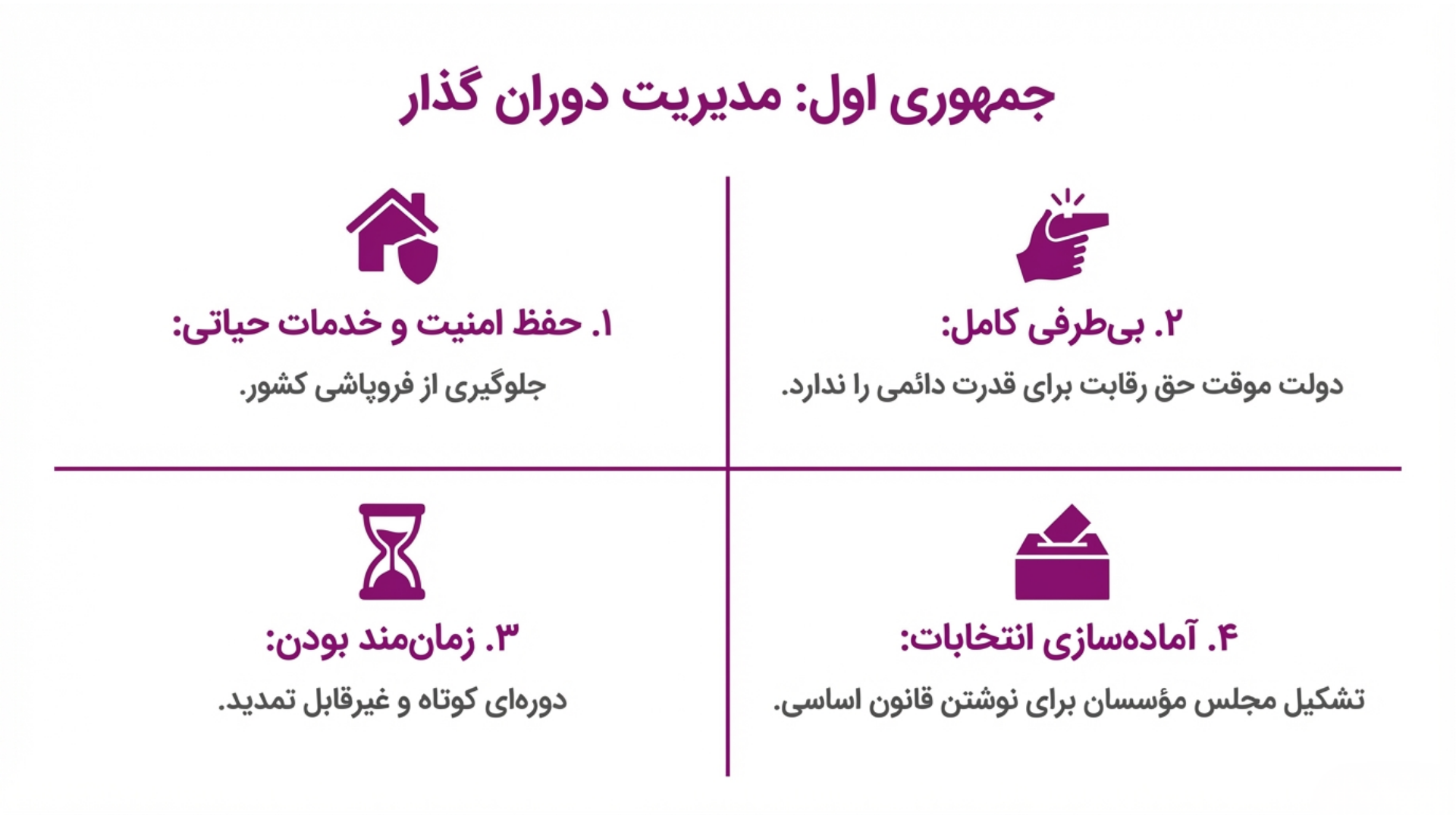
Definition: The First Republic is a temporary and transitional order aimed at stabilizing the country, preserving public security, and bringing society to conditions of free decision-making regarding the permanent order.
Missions of the First Republic:
- Preserving public security and the continuity of the country's vital services.
- Freedom of activity for parties, media, and civil institutions, and creating an atmosphere for inclusive national dialogue.
- Creating accountability and transparency mechanisms for the transition institution.
- Holding elections for the formation of elected representative institutions.
- Initiating decentralization and the formation of elected local institutions.
- Initiating the process of drafting a permanent constitution with the broad participation of the people and stakeholders.
- Creating an independent transitional justice mechanism coordinated with the national dialogue.
Rules of the First Republic:
- The transition period must be time-bound and unextendable.
- Prohibition of converting the transition institution into a permanent power.
- Prohibition of transition members utilizing their transitional position to secure future power.
- Commitment to implementing foundational principles and respecting human rights.
- Coordination among national dialogue, transitional justice, and the disarmament and reintegration program.
Section Three: The Second Transfer — Regional Nation-Building and Power Balance
This stage begins within the First Republic with the goal of preparing the country for a sustainable structure. Its main axes are:
- Creating elected provincial and municipal councils and administrations.
- Transferring executive and budgetary authorities to local levels.
- Guaranteeing cultural and regional rights within the framework of national unity.
- Establishing a sustainable balance between the center and regions.
- Paving the way for a final decision regarding the decentralized or federal model.
Section Four: The Second Republic — Sustainable Constitutional Order
Definition: The Second Republic is the permanent order of the country formed upon a new constitution and elected institutions.
Main Stages:
- Establishing a constituent process or constitutional drafting mechanism.
- Public and national participation in drafting the constitution, including through national dialogue and public consultations.
- Determining the final form of governance and power division.
- Ratifying the constitution through a referendum.
- Holding full elections for permanent institutions.
- Official termination of the mission of transitional institutions and full transfer of power to elected institutions.
Section Five: Evaluation Criteria for Any Transition Council
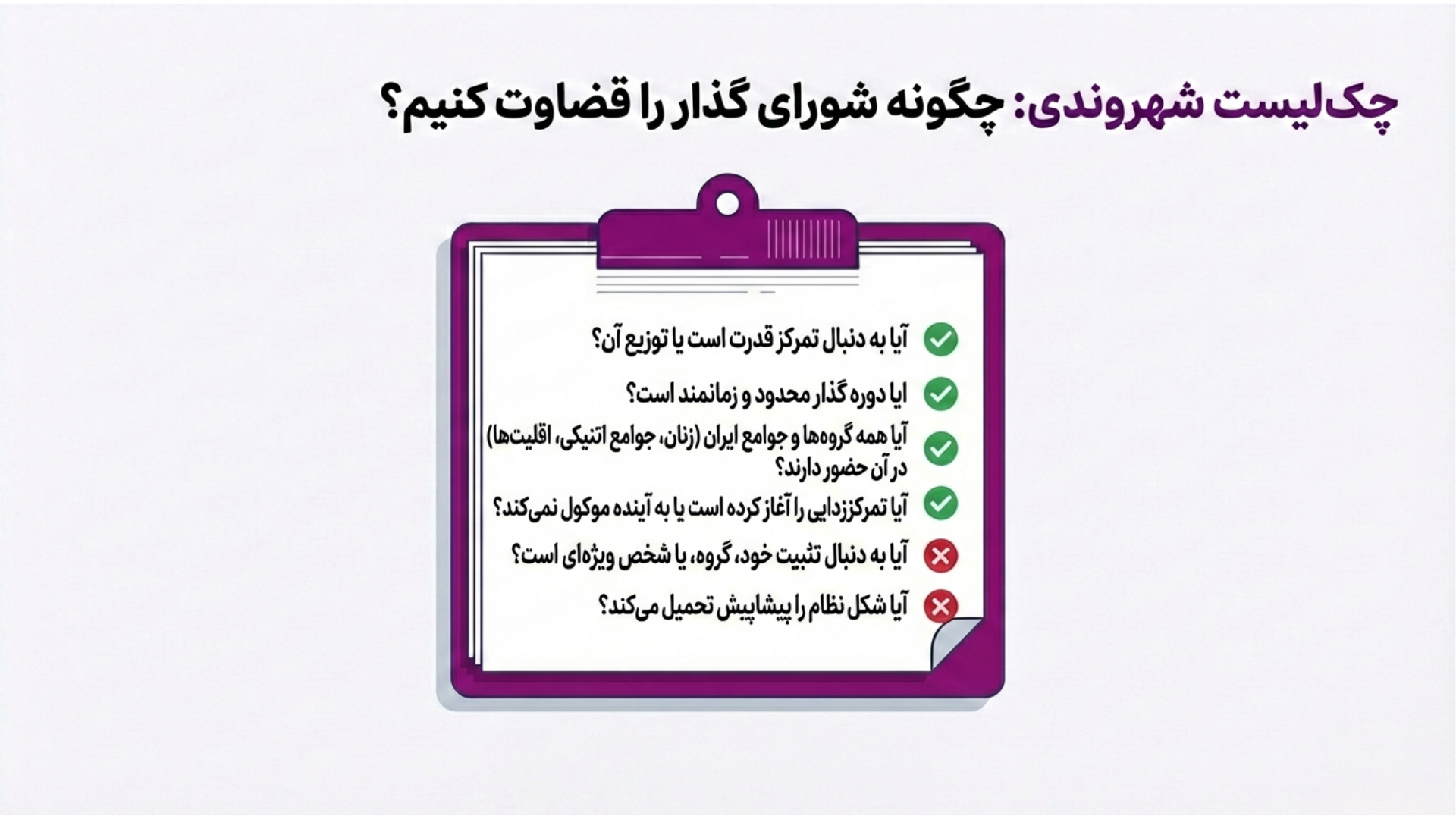
The transition booklet must become a tool for assessing the performance of transition councils. The main criteria include the following questions:
- Does the transition institution limit power or concentrate it?
- Does it open the path to free elections?
- Does it return power to the people?
- Does it initiate genuine decentralization?
- Does it turn the transition into a platform for consolidating power?
- Does it facilitate inclusive and independent national dialogue?
- Does it implement independent and effective transitional justice?
- Does it observe legal guarantees and independent oversight institutions?
Structural Conclusion
The transition booklet must clarify that democratic transition takes place in the following order:
- First, foundational principles and power-check rules are determined.
- Then, elected institutions are formed, and power is removed from the monopoly of groups.
- The concentration of power is broken and transferred to local and popular levels.
- Inclusive national dialogue, independent transitional justice, and disarmament and reintegration programs are implemented simultaneously to foster an atmosphere of trust and reconciliation.
- Finally, the people decide on the future form of the regime, and a sustainable constitutional order is established based on the public vote and democratic principles.
The ultimate goal of this transition booklet is to transfer power from the political ownership of groups to the public ownership of citizens and to establish sustainable democratic governance in Iran. Only by adhering to foundational principles, implementing inclusive national dialogue, establishing independent transitional justice mechanisms, and drafting the transition booklet can the reproduction of tyranny be prevented and a responsible, successful transition achieved.