If the People Do Not Want Freedom: From "Fear of the People" to the Politics of Care
While critiquing monarchist and conservative notions of transition, this essay addresses left-wing and republican forces concerned about the generalization of reactionary demands. It discusses the necessity of engaging in a politics of care as an alternative to stereotypical notions of mass enlightenment.
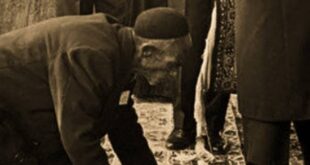
Farshid Moghaddam Salimi, in this note titled "What If the People Wanted Servitude?", begins with a television debate about the "Booklet of the State of Emergency" and the critique of the referendum by Yashar Darolshafa, leading to a fundamental question: What should be done if the majority of people truly desire tyranny and servitude? He first points out the contradiction in the claim of a monarchist defender who says republicans want to "impose the republic on the people," because logically, "imposing the people on the people themselves" is impossible. Instead, however, it is possible for tyranny or monarchy to be imposed on a people who want freedom, or for the people themselves, consciously or out of fear, to demand tyranny.
The author then addresses Hossein Ghazian's position in the same roundtable, showing that Ghazian's central issue is "maintaining order and governmental institutions" after the potential fall of the Islamic Republic and preventing chaos—an order that today relies largely on the force of law enforcement and security forces. In this framework, the Pahlavi faction's plan for a swift transfer of the repressive apparatus's loyalty to themselves is not fundamentally problematic from Ghazian's perspective; it is only operationally difficult and inefficient due to post-revolutionary divergent forces. Salimi considers this approach an example of a conservative outlook that wants a "half-baked revolution": overthrow with the people's force, but quickly returning the people to their homes through the same former machinery of repression.
Continuing, Salimi highlights the shared conservative proposition that "the people are generally dangerous." For this reason, their politics involves turning the government's fear of the people into the people's fear of themselves. He links this logic to the religious and psychological roots of "fear of oneself": the doctrine of original sin in Christianity and the concept of the "commanding self" (Nafs al-Ammara) in Islam are examples of power technologies that frighten people of their own desires and drive them into the embrace of religious authority, followed by state and capitalist authority. According to him, fascism is formed from the combination of two fears: fear of oneself, which is projected into hatred of the other (minorities), and fear of one's own, which is embodied in the emotion of fascination with the leader.
The author here formulates a key distinction: the conservatives' fear of "free people" versus freedom-seeking forces' fear of "unfree people"—people who have apparently broken free from the constraints of a regime, but emotionally and politically desire servitude and subservience to a new power, and who can, by majority vote, chain both themselves and others. By recalling the bombardment of Sanandaj after the 1957 (57) revolution and the new government's use of the Imperial Army, he shows that today's monarchist plan is a repetition of that same pattern of "popular revolution until overthrow, then activating the apparatus of repression to end the revolution," this time with more advanced technologies of control and repression.
In response to whether the left and republicans can "impose" freedom and republic, Salimi emphasizes that freedom is logically unimposable and there are only two paths ahead: First, the path of Leninism, in which an "enlightened" minority places itself outside the people and, upon failing to enlighten them, imposes the "good government" by force and deception upon the "ignorant" masses—a path whose historical experience has led to widespread dictatorship and violence. Second, the path he outlines inspired by Spinoza: understanding the structures and affects that produce the desire for servitude, because servitude is less a result of ignorance and more a product of the "desire for servitude" and affects such as fear of oneself, fear of others, and fascination with the "father, king, or leader."
In this Spinozist design, "action" derives solely from an understanding of forces, and overcoming the passions of fear requires empirical research engaged with daily life: examining which economic, political, family, educational, and neighborhood structures reproduce fear and anxiety, and what kinds of alternative organizations and relations can strengthen solidarity, trust, altruism, and the quest for freedom. Salimi emphasizes that such a quest cannot be purely academic or based on ready-made prescriptions; rather, it requires practical trial and error in group-building, cooperatives, care networks, and novel forms of coexistence.
In conclusion, addressing the left-wing forces, he asserts that if this force does not want to merely complain on the potential morrow of the revolution that "we spoke and no one listened," it must invest from now on—instead of an obsessive focus on top-down coalitions and capturing the state—in scattered, micro-activism at the level of the neighborhood, workplace, education, and networks of care and companionship. Instead of the figure of the "revolutionary teacher," he proposes the figure of the "friend" or "nurse": someone who does not merely advise a depressed person to take a walk, but walks alongside them—a model that recalls older traditions of mountaineering and leftist solidarity and can serve as the groundwork for the emergence of councils and forms of democratic self-organization during moments of political rupture.
To fully grasp the author's arguments, linguistic nuances, and theoretical references, we recommend reading the full text of this note on its original website, "Radical Democracy".
Related articles

The Draft of Despotism, This Time Without a Turban
Two narratives stand on opposite sides of a political divide, yet when you look in the mirror, they reflect the same face: both view history not as an arena of pluralistic forces, but as a field for the exclusive appropriation of agency. Both rewrite yesterday's history so as to pre-emptively seize tomorrow's power. Both share a single logic: the logic of appropriating history to appropriate power. Read the rest of the note.

“January 2026: The Uprising, Pahlavi-ism, and the Danger of Regime Change from Above”
In a note on its official website titled “The 2026 Uprising: Half a Step Forward, Two Steps Back,” the Labor Organization Action Committee analyzes the January 2026 uprising in the continuity of December 2017, November 2019, and “Woman, Life, Freedom,” describing it as a wave that has simultaneously deepened street radicalism and made the space more fertile for reactionary projects such as Pahlavi-ism and imperialist regime change.