“January 2026: The Uprising, Pahlavi-ism, and the Danger of Regime Change from Above”
In a note on its official website titled “The 2026 Uprising: Half a Step Forward, Two Steps Back,” the Labor Organization Action Committee analyzes the January 2026 uprising in the continuity of December 2017, November 2019, and “Woman, Life, Freedom,” describing it as a wave that has simultaneously deepened street radicalism and made the space more fertile for reactionary projects such as Pahlavi-ism and imperialist regime change.
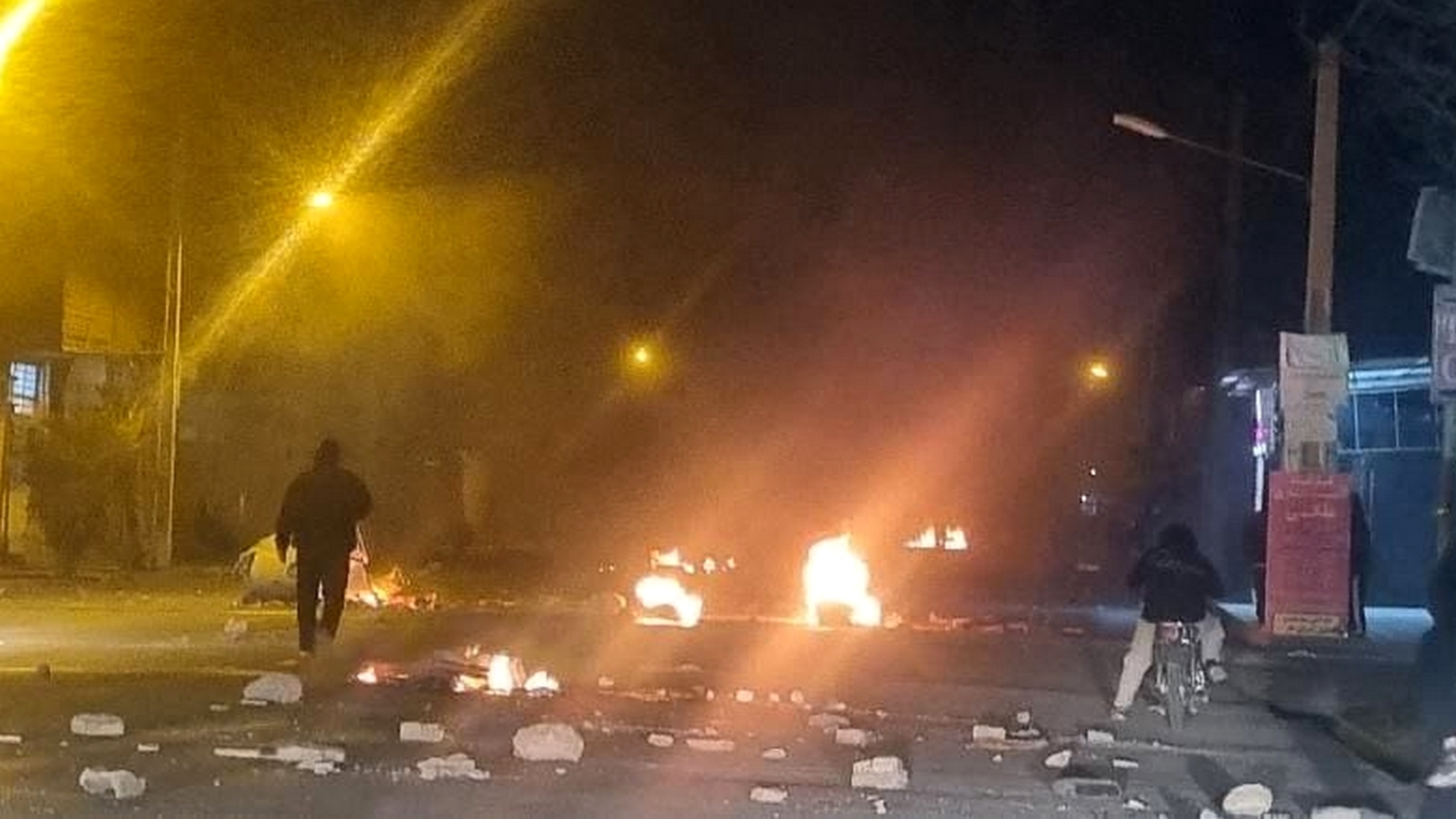
In a note on its official website titled “The 2026 Uprising: Half a Step Forward, Two Steps Back,” the Labor Organization Action Committee analyzes the January 2026 uprising in the continuity of December 2017, November 2019, and “Woman, Life, Freedom,” describing it as a wave that has simultaneously deepened street radicalism and made the space more fertile for reactionary projects such as Pahlavi-ism and imperialist regime change.
- The January 2026 uprising is divided into three phases: beginning with livelihood and currency protests, peaking in small towns and regions, and then leading to a million-strong, offensive explosion in major metropolitan areas, particularly Tehran and Mashhad.
- The text emphasizes the role of small towns as well as Lori and Bakhtiari regions, while conversely considering the relative decline in the street weight of Kurdistan and Balochistan as partly a product of the dominant Pahlavi-ist slogan atmosphere.
- Multi-layered communication disruptions (internet, mobile, SMS, satellite jamming) are introduced as the primary tool for containing the uprising and preventing organization and protest rituals.
At the macro level, the authors speak of a “single oligarchic bloc” within the ruling establishment that, going beyond official divisions, has turned the protests into an opportunity for economic shock therapy, a surge in exchange rates, and the advancement of anti-labor policies, interpreting this trend as part of the preparation for the post-Khamenei era and a shedding of skin from above.
Meanwhile, monarchism and “Long Live the King” are analyzed as a real and unavoidable phenomenon to be witnessed; a social base that is not necessarily classical monarchist, but rather desperate layers who now cling to the Pahlavi symbol precisely as a symbol of “foreign power supporting intervention.” In this framework, Reza Pahlavi is portrayed less as a genuine leader and more as a media figure and pressure card whose value is fueled by ties with foreign governments and even covert collaborations with factions of the Islamic Republic’s security apparatus.
The probable scenario of “regime change” in this note is depicted not as similar to Iraq and Libya, but as a type of shedding of skin from above in which the same ruling bloc, in a deal with imperialist powers, reshuffles parts of the structure without altering the fundamental logic of domination and exploitation. The danger of “illusions regarding a liberating foreign intervention” and turning the people once again into extras to legitimize a new order forms the core of the authors' warnings.
Against the two reactionary poles—theocratic despotism and the monarchist/regime-change project—the Action Committee emphasizes the necessity of building a “Third Front”: a current that stands simultaneously against both the Supreme Leadership and the monarchy, fights for the rights of workers, women, national minorities, and sexually/gender-oppressed groups, and puts forward a positive program for democracy and social justice, with demands such as the confiscation of government institution assets and workers' ownership and control over strategic sectors.
If you are looking to understand a perspective that intertwines the January 2026 uprising, the rise of Pahlavi-ism, the role of transnational media, and scenarios of regime change from above, analyzed from the standpoint of a radical leftist force, we recommend reading the full text of the Labor Organization Action Committee on their official website.
Related articles

The Draft of Despotism, This Time Without a Turban
Two narratives stand on opposite sides of a political divide, yet when you look in the mirror, they reflect the same face: both view history not as an arena of pluralistic forces, but as a field for the exclusive appropriation of agency. Both rewrite yesterday's history so as to pre-emptively seize tomorrow's power. Both share a single logic: the logic of appropriating history to appropriate power. Read the rest of the note.
If the People Do Not Want Freedom: From "Fear of the People" to the Politics of Care
While critiquing monarchist and conservative notions of transition, this essay addresses left-wing and republican forces concerned about the generalization of reactionary demands. It discusses the necessity of engaging in a politics of care as an alternative to stereotypical notions of mass enlightenment.